


Members From Over 50 Countries Join Russell Bedford’s EMEA Meeting
Professor Dr Klaus-Peter Hillebrand, CEO of DOMUS AG, Russell Bedford’s member firm in Berlin, and EMEA director of the Russell Bedford International board, opened this year’s Russell Bedford EMEA Regional Meeting, where over 50 countries were represented.
Speaking about how member firms have learned to adapt to a new way of working with much success, Klaus-Peter said: "The changes will have a long-term effect. Employees have realised the benefits of more flexible working situations and employers have realised the cost benefit of lower office costs. But we have realised that, despite our success in adapting, the need to come together has not faded.”
In his introduction to our first speaker, Jas Dhillon, VAT Director at London member firm, Lubbock Fine, Klaus-Peter considered the immense impact that Brexit would have on people, customs, and commercial law; an impact that will affect generations to come.
In this first session of the meeting, Jas Dhillon considered VAT after Brexit - implications for UK-EU trade. A highly comprehensive presentation, Jas summarised the impacts of Brexit on all areas of law and policy, the infamous Christmas Eve 2020 Brexit Deal and the impact on supplies of goods and services that have caused businesses unsurmountable challenges since January 2021.
Jas discussed the ‘so called’ free trade agreement and its many flaws, offering some key action points that businesses might need to consider, including mapping out supply chains to assess where they may be simplified or changed, and considering VAT registration in an EU country.
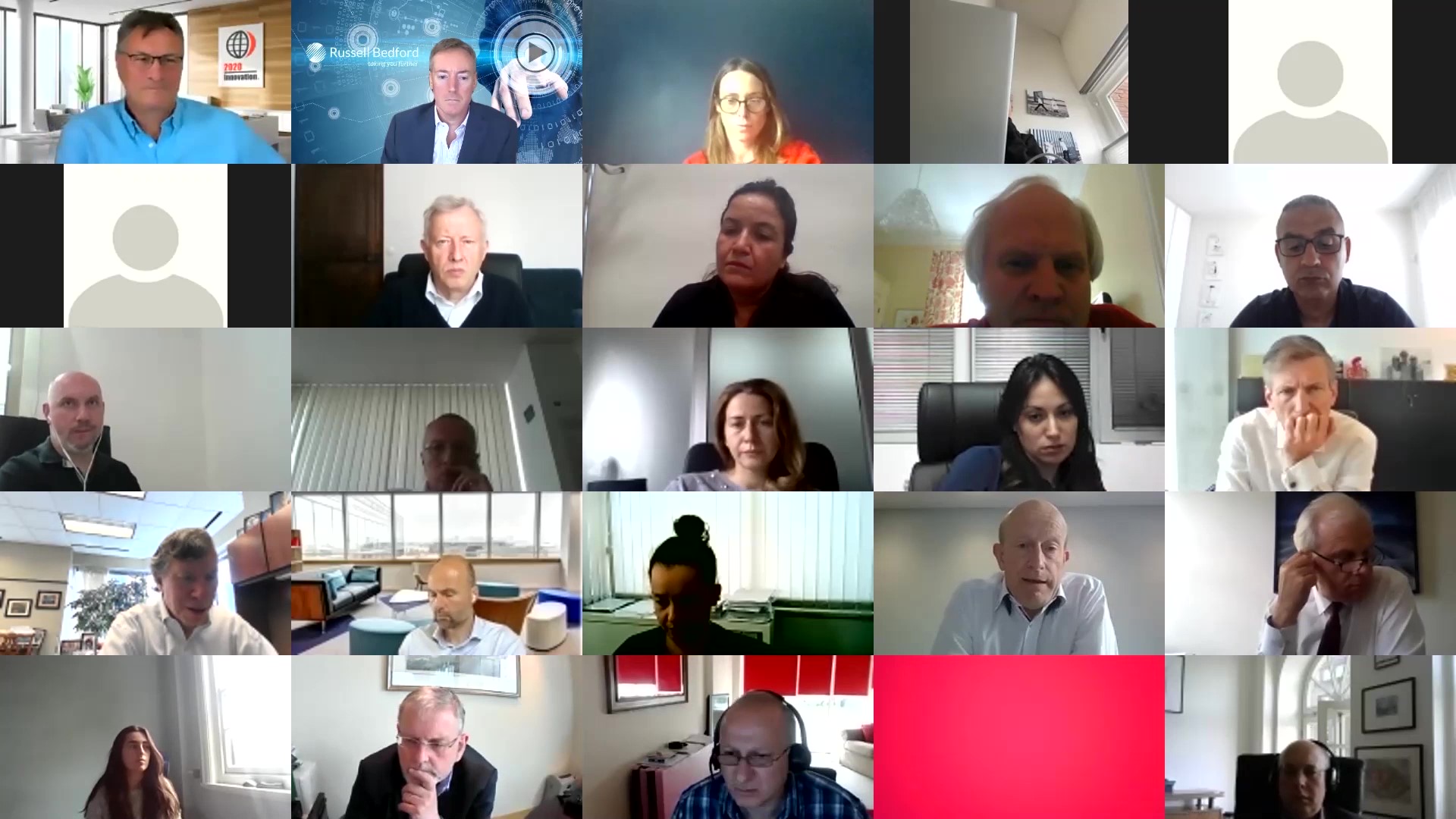
Up next was a discussion on Growth through acquisition: practical considerations, led by Ian Fletcher, professional speaker at 2020 Innovation Group, a training and solutions provider for progressive accountants and tax professionals. Ian was joined by Mark Eden, director at Jerroms, Russell Bedford’s UK West Midlands member firm, for a conversation on the factors that businesses need to consider when making acquisition agreements.
Mark stressed the importance of chemistry when deciding whether to proceed with an acquisition. He said: "Culture is everything; it’s important that the business is a good fit, otherwise you’ll undoubtedly run into problems.”
He added: "Being crystal clear on the aim of the transaction and what each side needs to gain from the transaction is imperative for a successful acquisition and ensuring that each side achieves what they’re looking for.”
When asked the million-dollar question, how much to pay for an acquisition, he advised: "If you pay all the value of a business, the margin for error is much smaller, so being sure that it’s the right business is critical. You need to consider - will I have my return in four years because, if the answer is no, then you may be paying too much.”
He added: "I typically advise against paying excessive value unless there’s a really strong case for a particularly interesting acquisition or an opportunity that can’t be missed.”
When asked about issues that can arise during an acquisition, he said: "It’s important to prioritise integration and make the acquired firm feel part of the team as soon as possible, so that they don’t feel they’ve become an afterthought.”
The final session on day one, was led by Chris Harvey, Coach4Managers, an executive coach who has worked with individuals and groups at all levels, supporting their development in the workplace. Chris led an open forum discussion on Team management in the ‘new normal’, sharing insights into how to maintain the right support and leadership in an ever-changing work environment.
Day two of the meeting was opened by Russell Bedford CEO, Stephen Hamlet, who reported on the network’s recent growth and achievements; thanking member firms for their hard work and dedication, as they continued to support clients through these difficult times.

The first session of day two was led by Kyle Gibbons and Caroline Winch, Confirmation (of Thomson Reuters), who joined to discuss Quality audits and the beginnings of a new audit era. As fraud cases have seen an increase of 92% since the beginning of the pandemic, Kyle and Caroline offered advice on counteracting the challenges facing businesses.
In the penultimate session, Andrei Badiu, partner at 3B Expert Audit, Russell Bedford’s Romanian member firm, led a panel discussion with marketing professionals within the Russell Bedford network on Marketing your firm in the digital age.
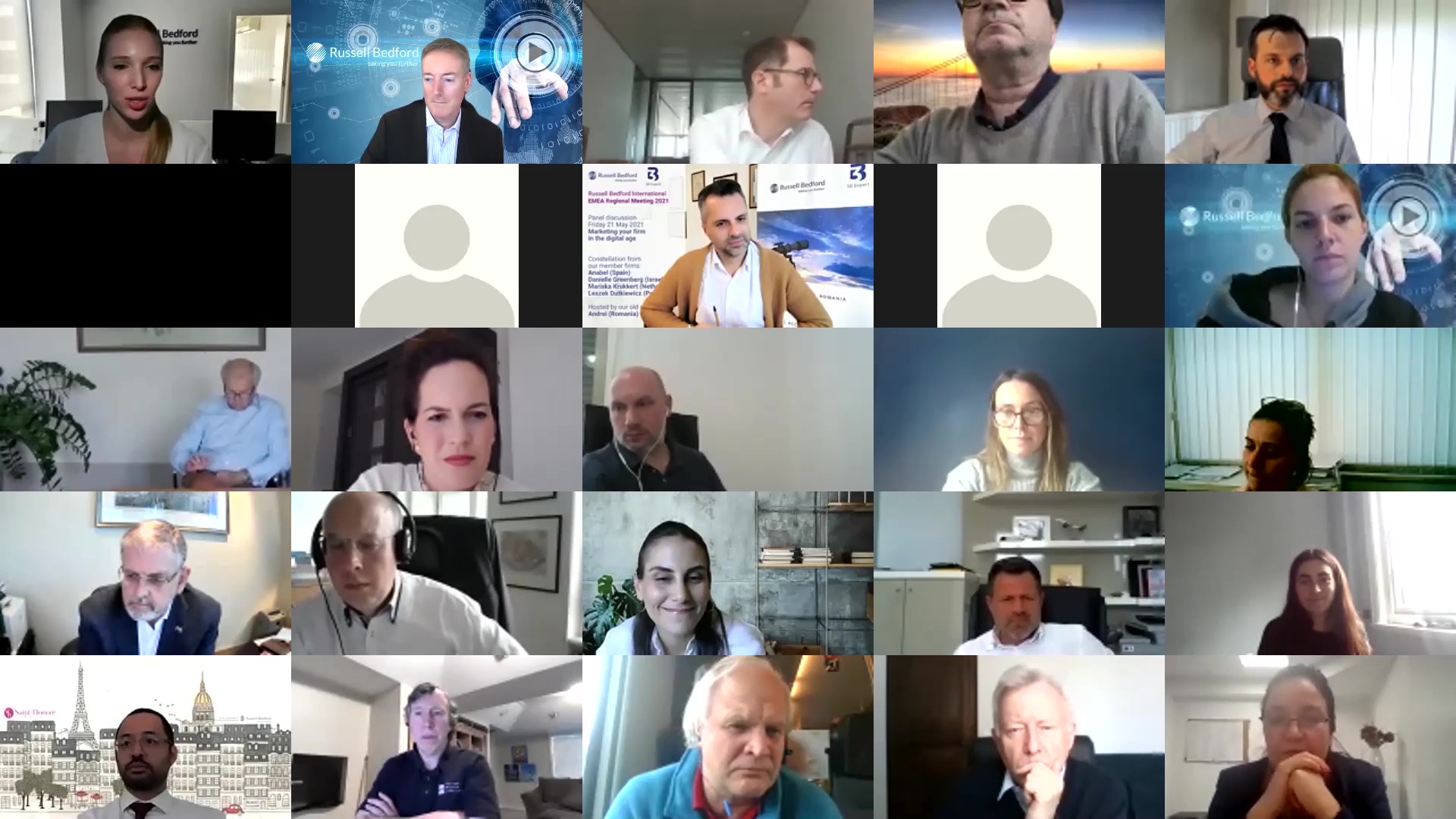
Joining Andrei in discussion were panellists specialising in marketing, Anabel Salinas, GNL Russell Bedford, Spain, Mariska Krukkert, Boon, Netherlands, Danielle Greenberg, Raveh Ravid, Israel and Leszek Dutkiewicz, Russell Bedford Poland.
Creating high value and regular content was a central theme of the discussion, with all panellists placing it high on their list of priorities for successful digital marketing strategies.
Anabel Salinas said: "Valuable Content is everything, as is a diverse range of digital touchpoints, including a well optimised website and regularly maintained social media channels.”
She added that: "Sometimes the language you use will not be understood by your client, so it’s critical that your message is on point. Gain a real understanding of your client base, what they need and the language that makes sense to them and then build your content around that, so that you’re speaking to them in a way they understand.”
Mariska Krukkert advised firms that are new to marketing or who have limited resources to: "Start by thinking - how much can I invest; whether that’s marketing spend or people.”
She also encouraged firms to: "Just start. It’s important to take that first step. Start small, do a little first and build from there. In time, you can invest in personnel and professional training to ensure that your employees understand your wider marketing strategy and can support this, through sharing your content and contributing to your messaging online.”
Leszek Dutkiewicz said: "The impact of Covid has been significant but it hasn’t changed our overall strategy. Our content is very topical; we adapt quickly to put out relevant and timely content that’s useful to our audience. Much of our recent content has been on government support assistance available to our clients.”
He added: "As there is a significant investment involved in producing regular content, we try to repurpose it as much as possible. For example, the content from our monthly magazine will also be published on our website; aiming to widen our reach as much as possible.”
Danielle Greenberg added: "We focus a lot on brand awareness and we engage our team to support us with achieving our goals. The whole team is onboard.”
She added: "Maintaining a regular social media calendar is so important to avoid last minute posting and ensuring that the content that we’re posting is always of high quality.”
To close the meeting, members had the opportunity to connect with their colleagues more informally during the ‘Russell Bedford Happy Hour.’ A series of polls revealed some of our member’s biggest achievements over the past year; which included ‘still being married’, ‘getting a haircut’ and ‘buying a dog.’
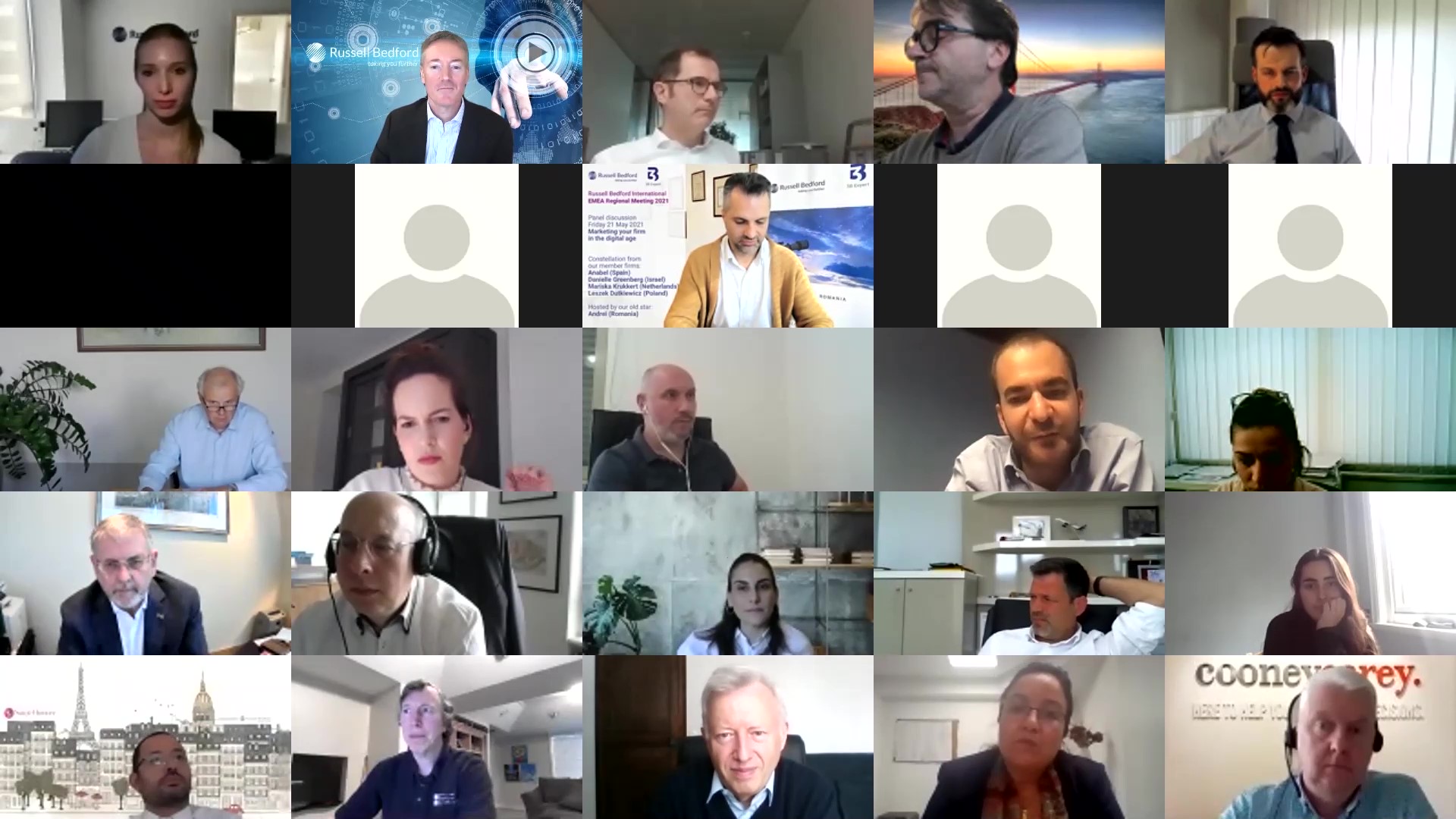
Some of the biggest surprises of the past year were ‘the kindness of people’, ‘how enterprising people are’ and (perhaps not so surprising) ‘how annoying their children can be!’
First on the agenda once members find ‘freedom’ from Covid restrictions were, unsurprisingly, ‘getting on a plane to literally anywhere’, ‘dinner out with friends’ and ‘seeing extended family.’
Speaking about the event, Russell Bedford CEO, Stephen Hamlet, said: "It’s encouraging to see our members carve out the time in their very busy schedules to dedicate to their professional development. Clearly, members see the value in taking a step back from often heavy workloads, to invest in their learning and development and to connect with colleagues from around the region.”
He added: "For me, it’s been a priority, particularly throughout the challenges of the past year, to ensure that we, as a network, continue to provide the same level of support and opportunities for our members to network and build meaningful business relationships. It’s been different, and we’ve had to think creatively, but it has to a large extent worked. I’m constantly seeing new faces at our online events that maybe I wouldn’t have had an opportunity to meet previously – one of the unexpected benefits of embracing the virtual world.”